News
FOUNDATION AWARDED JOBS FUND GRANT FOR MAWSON’S HUTS PROJECT
Sydney Oct 16—The Mawson’s Huts Foundation has been awarded a special grant of $486,000 from the Federal Government’s Jobs Fund initiative for conservation works on the historic wooden huts during the summer of 2009-10.
Federal Minister for the Environment, Heritage, Water and the Arts Peter Garrett AM announced details of the grant in Hobart this week which will result in a 10 person team departing Hobart on Dec 3 onboard the P and O owned French supply ship L’Astrolabe.
The team will spend eight weeks at Cape Denison carrying out vital conservation works including the removal of further ice from within the hut and the recovery and treatment of artefacts left behind with departure for home of the 1911-14 Australasian Antarctic Expedition (AAE) led by Sir Douglas Mawson.
David Jensen AM chairman and CEO of the Foundation said the grant was a major boost to the conservation effort which the Foundation began in 1997 in partnership with the Australian Antarctic Division.
“This grant allows the Foundation to continue its conservation programme and employ nine part time and two full time specialists for this summer and with the Centenary of the AAE’s departure from Hobart due in December 1911 it is very timely,” he said.
“The wooden huts are the birthplace of Australia’s Antarctic heritage and the Grant will play a major part in the conservation programme for the Cape Denison site.”
TOP NEW ZEALAND WINES SERVED TO THE FRENCH
Sydney Sept 16—A selection of high quality wines from one of New Zealand’s top vineyards will be served to the French this summer during a voyage to the Antarctic.
Red and white vintages from Marlborough based Astrolabe Wines Ltd will be served onboard the French Antarctic supply vessel L’Astrolabe which services the Antarctic base established by France at Dumont D’Urville and named after the famous French explorer in the 1850’s.
His ship the Astrolabe explored the Pacific including Australia and New Zealand and the Marlborough based wine company has named it vineyard after the explorer.
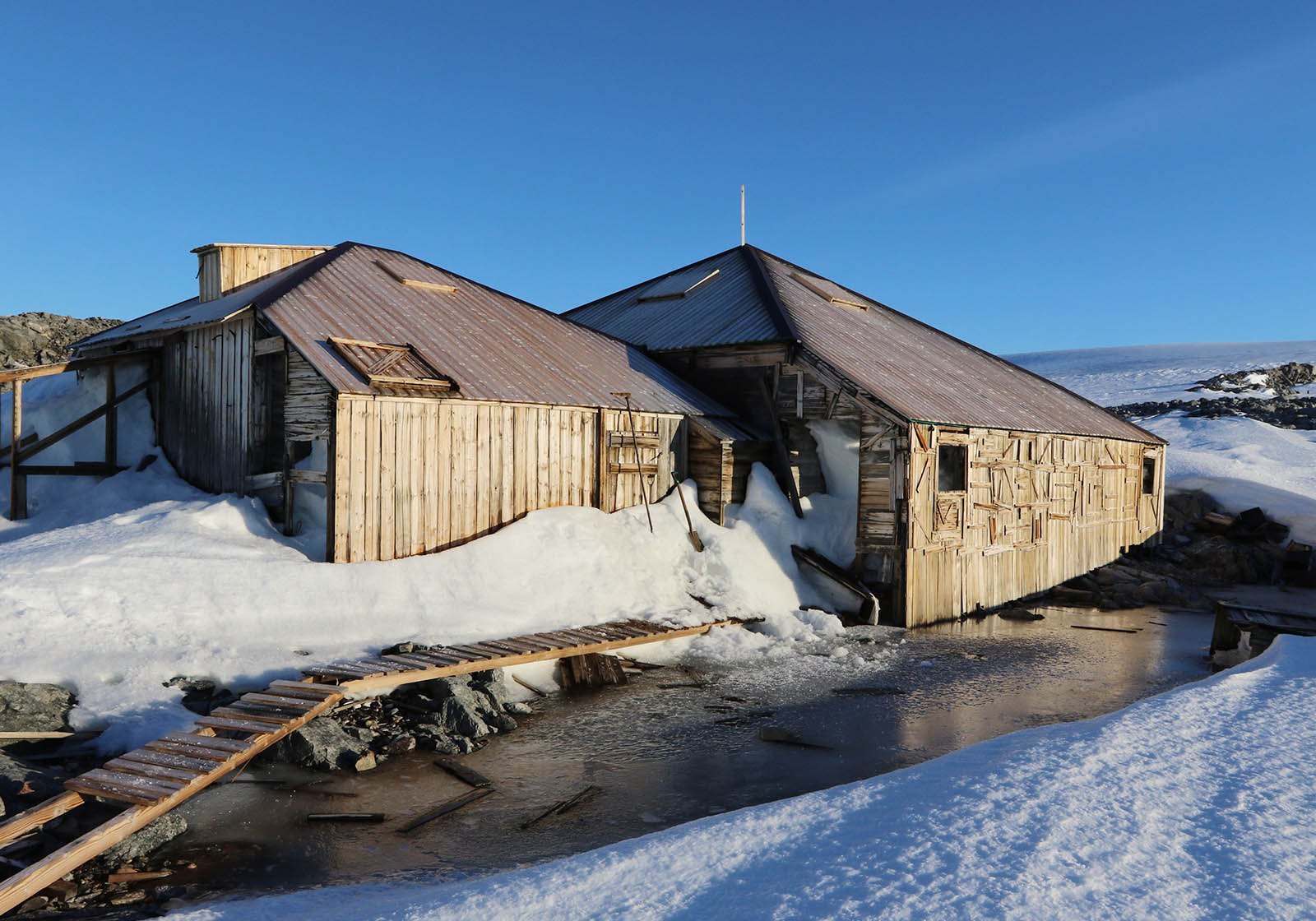
The P and O owned ship L’Astrolabe operating out of Hobart Tasmania, will transport a team of 10 expeditioners to Cape Denison who will spend seven weeks undertaking conservation works on the wooden huts used as a base for two years by the 1911-14 Australasian Antarctic Expedition led by Sir Douglas Mawson, a young Australian geologist.
Conservation work on the huts, regarded as the birthplace of Australia’s Antarctic history, is being undertaken by the Mawson’s Huts Foundation, a not for profit charity organisation based in Sydney and headed by NZ born David Jensen AM.
Jason Yanks, General Manager of Astrolabe Wines says the historical connection between the vineyards, wine company and the French ship, which makes four voyages each summer to service the scientists based at Dumont D’Urville, is a wonderful way to promote his wines.
“The original Astrolabe sailed into Marlborough Sounds and Dumont D’Urville and his crew went ashore not far from our vineyard so it really is fitting that we’ll be providing a good selection of all our wines, “ said Jason. “Dumont D’Urville is part of the history for both Australia and New Zealand and our company is very pleased to have an opportunity to remind the French of this historical connection.”
“I have no doubt the French will enjoy vintages and appreciate the historical connection,” said Jason. Included in the selection will be a few bottles of the Astrolabe’s “Durvillea” brand which has just been released.
Astrolabe Wines was established by a group of friends in 1996 who decided their now very successful vineyard should be named after the French explorer.
CONSERVATION SEMINAR A GREAT SUCCESS!
With a contingent of four from the New Zealand hut conservation program and some excellent presentations including our recent heritage expedition reports, it was a great day of sharing information and approaches to the challenges of conserving the wooden huts of the Heroic Era of Antarctic exploration. And an inspiring start to planning the works program for next summer, preliminary details of which were discussed on the day after the seminar with heritage specialists including architects, conservators, carpenters, scientists and representatives of the Foundation and the Australian Antarctic Division.
The next step is for a draft of the works plan to be developed, a team to be selected to carry out the work, shipping arrangements to be confirmed and the big list of tasks leading up to departure in early December to be worked through. Keep an eye on the Conservation Expedition section of this website for progress as we head for December.
CONSERVATION SEMINAR April 30th Sydney
Each year the Mawson’s Huts Foundation hosts a Seminar to review the past season’s conservation work and invite comment from members of the public on future work at the Historic Site. This year, presentations will include an illustrated lecture by Dr Ian Godfrey, Chief Conservator and Leader of the recent expedition, footage of highlights of the expedition by the official photographer, David London and a presentation by Dr Chris Henderson who led the search for the air tractor. The Foundation is also happy to welcome Dr David Harrowfield from the UK Heritage Trust who will put the Australian conservation effort in context with the work of other nations to conserve Antarctic heritage huts.
This year the Seminar was held at The Australian Museum, corner of College and William Streets, Level four, William St entrance, 9 am to 4 pm.
Lake-floor mapping a bonus from summer expedition
Thursday January 22, 2009 Commonwealth Bay, East Antarctica
The first trial of ground-penetrating radar to map the floor of ice-covered lakes in the Australian Antarctic Territory has been completed at Cape Denison, producing some very promising results and raising new questions about how such lakes were formed.[SinglePic not found]
The results show the potential for using radar to map lakes when they are frozen, by-passing the many problems associated with open-water bathymetry surveys in adverse conditions.
Dr Chris Henderson, of the 2008-09 Mawson’s Huts Foundation team at Cape Denison, conducted the lake bathymetry exercise on behalf of the Australian Antarctic Division.
Dr Henderson surveyed the floors of the two largest lakes at Cape Denison – Round Lake and Low Lake – by dragging a 250 megahertz radar aerial across their icy surfaces.[SinglePic not found]
“We won’t get a definitive outcome until we have finished analysing the data, but these initial results look very promising, and are consistent with physical observations we made at test sites on both lakes,” he said.
An interesting facet of the study was that while there was only 200 mm of sediment at the bottom of Low Lake, the sediment at the bottom of Round Lake was about a metre thick. The cause of this apparent anomaly is not yet known.
It is likely the radar mapping technique will be applied at other Cape Denison lakes in coming summer seasons.
PRICELESS ARTEFACTS UNCOVERED AFTER NEARLY 100 YEARS
PRESS RELEASE
Cape Denison, Antarctica Jan 22—A priceless collection of artefacts from the 1911-14 Australasian Antarctic Expedition (AAE) led by explorer Sir Douglas Mawson are being uncovered for the first time in nearly 100 years as materials conservators engaged by the Mawson’s Huts Foundation carefully remove them from the ice inside the wooden huts which was the AAE’s base for two years.
Smoking pipes, a Horlicks milk tin full of linseed oil, match boxes, a broken toothbrush, the handle of a hockey stick, a near perfect French champagne bottle and the collar of one of Mawson’s husky dogs are among some of the first items to be uncovered.
A three person conservation team headed by Dr Ian Godfrey of the WA Museum, Fremantle, this summer began the long process of recovering, documenting and treating the thousands of items left behind when the AAE departed for home in December 1913.
“The remains of Mawson’s expedition are unique in Antarctica as unlike other historic expedition sites they have not been subjected to major tidying-up since the end of the original expedition, “he said.
“The contents of the Main Hut are especially important as historical records of what’s become known as the heroic era of Antarctic exploration,” said Dr Godfrey
The canvas dog collar still has strands of hair attached and once in the warmth of the special conservation laboratory built by the Foundation at a cost of over $120,000 just under a kilometer from the hut, began to reveal much more according to conservator Megan Absolon “It definitely still smelt of dog which must have rolled in rotten meat. I thought for a moment it was endearing to smell historic doggie but that idea wore of quicker than the smell on my hands.”
The third member of the conservation team Michelle Berry from the Museum of Victoria is on her second excursion to the huts. “We’ve need this facility for a long time. Just as we’ve stabilized the structures, now we can help prolong the life of their contents without removing them from Antarctica.”
With only a five to six week window possible for working at Cape Denison each summer before blizzards begin to hit the site regularly from late January, the Foundation’s eight person team is preparing to leave for home and is scheduled to arrive in Hobart onboard the French Government Antarctic supply ship L’Astrolabe on January 29.
Further expeditions are planned for each of the next five years to continue the conservation programme for both the huts and the artefacts provided sufficient funds are available.
”The cost of mounting a five to six week expedition is around $500,000 and we need to raise that amount each year to keep the momentum going” said David Jensen AM Chairman and CEO of the Foundation.
“These huts are the birthplace of Australia’s Antarctic heritage and it’s essential they are conserved as part of the nation’s history.”
Working in partnership with the Australian Antarctic Division, the Foundation has financed and organised eight major expeditions to the site since its establishment in 1997.
“The centenary of the AAE’s departure from Hobart is just two years away and that will provide a wonderful opportunity to celebrate the achievements of Mawson and his men,” said Mr Jensen. “We just need more funds to take advantage of this.”
For further information please contact
David Jensen AM or Rob Easther
Chairman/ CEO Expedition Manager
0414 333381 0419 337169
2008-09 MHF Conservation Expedition: Introduction
Building works, ice removal, artefact conservation, topographical surveying, tide measurement and an intensive search for Douglas Mawson’s lost air tractor were the major elements of a month-long program at Cape Denison, Antarctica, this summer by the 2008-09 Mawson’s Huts Foundation conservation team.
With the assistance of unusually calm, fine weather, the team managed to complete the major task of fitting out a new artefact conservation laboratory at Sorensen Hut, the accommodation module about 1 km east of Mawson’s historic Main Hut.
The new laboratory made possible two weeks of conservation work on artefacts recovered in 1978 from the workshop of the 1911-14 Australasian Antarctic Expedition. About 90 artefacts were treated to stabilise their condition before being returned to the workshop.
The opening of the laboratory marks a major new phase in work at the historic site with an increased focus on artefact conservation. For the first time artefacts recovered from the ice can be treated on site instead of having to be transported to and from Australia for treatment.
The summer program involved a search for a significant artefact buried under metres of ice since the 1970s – the AAE’s “air tractor”, a converted early monoplane which Mawson brought to Antarctica to tow sledges.
The search, which used ice-penetrating radar equipment and early photographs to try to pinpoint the location of the remains, involved digging two trenches in the ice, one of them nearly 3 m deep, but the remains were not found. The Foundation will continue to explore other ways of locating it in future expeditions.
Other programs conducted by the expedition included recording of topographical features including high points and lakes, and support for a French-Australian tide measurement program.
While ice excavation revealed more of the interior structure of the Main Hut, some exterior fabric was secured against the impact of the Cape’s harsh winds and snow. The Foundation remains committed to a continuing conservation program at the historic site as the AAE approaches its centenary in 2011.
The summer has seen numerous tour visits to Cape Denison by the cruise ships Spirit of Enderby, Marina Svetaeva, Orion and Bremen.
The expedition was deployed from the Aurora Expeditions cruise ship Marina Svetaeva, and returned courtesy of the French Institut Polaire on its vessel L’Astrolabe.
The 2008-09 Mawson’s Huts Foundation expedition is supported by the Australian Antarctic Program.
The Huts
- First inspection: hoar frost Huge, intricate formations of hoar frost crystals greeted the 2008-09 conservation team on its first systematic inspection of the Main Hut. The party had to remove this year-long build-up before getting on to other work.
- First inspection: snow ingress during 2008 The three-person conservation team of Dr Ian Godfrey, Michelle Berry and Megan Absolon made measurements to assessed changes in the level of ice in the building, intrusion of snow and deterioration of artefacts already uncovered in a decade of work by the Foundation.
The team found that adding protective cladding two years ago on the roof of the living quarters and workshop has significantly reduced the amount of snow entering the building via the roof while appearing to have no negative impact on the interior environment.
They found no visual evidence, either visual or from instrument data, of deterioration to the main fabric of the building or interior spaces apart from the natural effects of high humidity inside the hut and abrasive action from wind-blown snow outside.
- Data loggers – download with Panasonic Downloading and checking of 12 months of monitoring data from instruments placed in previous years to measure temperature, relative humidity and vibration of structural elements yielded information to guide conservation decisions about future work on the hut’s fabric and contents.
- Ian on state of Hut and work program for 2008-09 Ian H. discusses what was done in the Hut in 2008-09
- Ice removal at selected locations Ice removal work focused on ice that has accumulated at higher levels inside the building, often caused by melting and re-freezing. This included work above Mawson’s room and in the corner bunks of Xavier Mertz and Dyce Murphy.
- Work at Transit, Magnetograph, Absolute Mag. Huts The Magnetograph House and the Absolute Magnetic Hut were inspected for the first time in two years (they were covered in snow in 2007-08). Timber which was lost from walls of the Transit Hut during 2008 was re-fastened.
The Air Tractor Search
- Chris’s contraption Ice-penetrating radar and imaging software was used in the search for remains of the AAE’s “air tractor” – a wingless monoplane used briefly in 1912 as a sledge-hauling machine.
Chris H. on the search for the Air Tractor.
First operation including trench Dr Chris Henderson, the team’s medical officer, made an initial survey based on 2007-08 estimates of the of the likely location of the frame of the air tractor. A trench was dug based on early indications of possible remains, but this proved negative.
- Re-assessment of evidence Dr Henderson and others re-appraised photographic evidence from 1913, 1931 and 1976, indicating an alternative location for the remains. readings from the ice-penetrating radar were ambiguous but suggested a possible location for a new trench.
- New operation (Trench 2) A trench nearly 3 metres deep was dug at what was considered the most likely spot. The bottom half of the work was in hard, old ice which took many hours to remove. When a metal detector indicated no metal at the base of the trench, the project was called off.
- Future work The Foundation will consider the prospect of resuming the search using other technology in a future program.
The Lab
- Prefabrication – on board ship and unloading by chopper Fitting out a laboratory at Cape Denison had high priority for the 2008-09 summer team. This required bulky prefabricated parts to be shipped and airlifted to the site by Marina Svetaeva.
Ian on significance of lab for future of MHF work at Cape Denison Conserving Mawson’s Huts artefacts that have deteriorated over the decades has been a vexed problem because it required them to be transported to Australia. Now the work can be done locally.
(Ian G. on future of MHF work at Cape Denison with laboratory.)
- Pete and Ben during assembly At Sorensen Hut, across a ridge east of the Main Hut, team members Peter McCabe and Ben Burdett fitted a new floor to the laboratory and assembled benches before installing a fume cupboard.
- Michelle, Megan installing equipment With the handover complete, conservators Michelle Berry and Megan Absolon installed laboratory equipment and supplies.
Michelle, Megan transferring & treating artefact Then came the delicate task of transferring artefacts recovered 30 years ago from accumulated ice in the AAE Workshop and beginning the long job of stabilising their condition before they are returned to the Workshop. About 90 artefacts were worked on before the team had to depart on 20 January.
Tourism
- Shipboard (Marina Svet) – visitors’ comments, visuals on board The 2008-09 Mawson’s Huts Foundation expedition travelled to Antarctica via Macquarie Island aboard Aurora Expeditions’ ship Marina Sveraeva. This provided a valuable insight into the thoughts of tour visitors about the site and Antarctica generally.
(Visitors’ comments)
- Marina Sv. at Cape Denison – landing, people on site The day the team was deployed at Cape Denison was also the first of several days of ship visits during the team’s time at the Cape. While the main job was to get ready for the month ashore, much time was spent dealing with visitors’ questions about Cape Denison, a pattern that was to be repeated during later ship visits.
- Orion, Bremen arrive at Cape Denison With the arrival of Orion, team members had the opportunity of a shower and catered meal aboard the ship before returning to shore to provide assistance to tour visitors.
- Tour groups queuing outside Hut The Main Hut has limited space inside, with artefacts and fabric which must be safeguarded against accident, so each tour of the interior is strictly limited to three visitors. The result is often a long queue of people outside the main entrance.
- Visitors inside Hut Inside, visitors are given an overview of the interior, including the bunks of the men, Mawson’s room and Hurley’s darkroom, along with kitchen and lighting facilities.
Greg Mortimer – what Cape Denison means to him Greg Mortimer, chief executive of Aurora Expeditions, is a veteran visitor to Cape Denison, and a strong supporter of the work of the Foundation. What does the site mean to him?
(Greg Mortimer on his feelings about Mawson’s Huts.)
Other projects
- Lake mapping The ice radar used for the air tractor search also proved valuable for measurements of the depths and underwater topography of Cape Denison’s small lakes. Dr Henderson also made physical measurements of sediment depths on several lakes.
- Tide gauge work Mawson’s expedition nearly 100 years ago established a tidal benchmark at Cape Denison. The expedition’s valuable early data makes Cape Denison an important location for a joint Australian-French tide gauge survey to ascertain sea level at the Cape. The Foundation’s crew established new benchmarks and measured levels and locations for the tide gauge project.
PRESS RELEASE
Seat of first aircraft taken to Antarctica recovered
Cape Denison, Antarctica Jan 20—The remains of a seat from the first aircraft taken to the Antarctic has been recovered by a team of expeditioners from the Mawson’s Huts Foundation while working on the conservation of the wooden huts used as a base by the 1911-14 Australasian Antarctic Expedition (AAE) led by Sir Douglas Mawson.
The fuselage of a Vickers monoplane was taken south by Sir Douglas for use as an air tractor after the wings were damaged during an Adelaide test flight just prior to departure.
AAE members built a third seat for the two seat Vickers which was used briefly to tow sledges before being abandoned in the ice not far from the huts. The Mawson’s Huts Foundation team failed to locate the fuselage using ice penetrating radar and digging two deep trenches into the ice but located the hand made seat in rocks near the main hut.
Dr Chris Henderson the team’s medical officer, who led the search for the fuselage, said the seat was an exciting find.
“The Foundation plans a more intensive search for the fuselage next summer but the seat is a very exciting find and just adds to the story of this aircraft.’ said Dr Henderson. “Canvas, which was probably sail cloth, is still attached to the hand made metal frame of the seat and this will now be specially treated so eventually it will hopefully sit alongside the fuselage when it’s found.”
The eight member Foundation team is due back in Hobart on January 29 after successfully fitting out a special conservation laboratory to conserve artefacts left inside the main hut which consisted of the living quarters for 18 men and a workshop.
Ends
For further details please contact:
Rob Easther
Expedition Manager 0419337169
PRESS RELEASE
Mawson’s Antarctic aeroplane remains hidden, for now
Friday January 16, 2009
Two days of digging down through nearly three metres of accumulated snow and ice at Cape Denison have found no trace of Douglas Mawson’s lost “air tractor”.
But what some hard thinking and modern technology have failed to resolve, nature may well sort out over coming years, according to the Mawson’s Huts Foundation expedition team leader, Dr Ian Godfrey.
“We had hoped to short-circuit the process of revealing this important relic of the Australasian Antarctic Expedition, but the ice isn’t going to let its secrets go so easily,” Dr Godfrey said.
“We have had major melts here before, and I don’t doubt that some future summer this will happen again, revealing all that has been hidden for so long. In the meantime, we’ll continue to explore other ways of locating the air tractor.”
The expedition, whose primary role each summer is conservation work on Mawson’s Huts and their contents, used ground-penetrating radar and observations based on past photographs to pinpoint the most likely location of the air tractor remains.
The fuselage of the air tractor, converted from an early aeroplane, was left behind at Cape Denison when the AAE departed in December 1913.
Mawson had obtained the aeroplane – the first ever made by the UK engineering firm of Vickers –for aerial reconnaissance in Antarctic, but it lost its wings in a crash before the expedition got started.
Brought to Cape Denison to pull sledges, the wingless craft failed only a few kilometres into its maiden journey. The men hauled it back to their base, salvaged the engine and left the remains in a gully below the Hut.
It remained there, often covered in snow and ice but every so often revealed during a summer melt. It hadn’t been seen for over thirty years when the Mawson’s Huts Foundation took up the challenge of finding it.
After earlier ground-penetrating radar scans and an exploratory dig failed to provide any clear information, the main investigator, Dr Chris Henderson, used transects based on photographs of the metal remains in 1931 and 1976 to establish another location about 20 metres away.
The search culminated in a deep trench that penetrated 2.7 metres down into hard ice to the north-west of Mawson’s Main Hut.
With no sign of the airframe after a final metal detector scan, and no further time available before the expedition’s scheduled departure for Hobart on January 19, the search had to be abandoned for the summer.
“Whilst it is disappointing that the airframe has not been found, I am confident that the engineering, electronics, software and search techniques we have used are rigorous and with more time, will ultimately result in locating the air tractor” said Dr Henderson.
The 2008-09 Mawson’s Hut Foundation conservation expedition is supported by the Australian Antarctic Division.
CAPTIONS:
(1) The trench dug in search of the air tractor, about 50 metres north-west of Mawson’s Main Hut.
(2) Looking up from the bottom of the trench, nearly 3 metres below the surface.
The photographs of the exploration site are available from Rob Easther, Expedition Manager,
Mawson’s Huts Foundation Tel 0419 337 169 Email: rob.easther@mawsons-huts.org.au who is also the contact for this release.
Foundation resumes AAE tide measurements
Tuesday January 13, 2009
Tidal data obtained today by the Mawson’s Huts Foundation’s Cape Denison summer team will be compared with 1912 Australasian Antarctic Expedition records to provide a unique Antarctic sea level record over nearly a century.
The 2009 record will provide sea level researchers with current data that refers back to the 1912 benchmark established by Douglas Mawson’s AAE, enabling them to determine any change in sea level over the succeeding 97 years.
Global sea levels are currently under scientific scrutiny in light of climate change. At present, warming oceans and loss of ice from polar icecaps are causing average sea levels to rise at a rate of about 3 mm a year.
Peter McCabe, of the Mawson’s Huts Foundation team, installed global positioning system (GPS) equipment on land near the AAE’s original benchmark, inscribed into rock at Cape Denison, and another unit floating on the surface of Boat Harbour about 100 metres away.
The two units together provide an accurate tidal range for the same Cape Denison waters as were previously measured by the AAE 97 years earlier.
In 1912, Robert Bage, a military engineer, was given charge of tidal records for the Cape Denison base of Douglas Mawson’s expedition.
He kept scientific records of tidal movements through the winter of 1912 – the first systematic sea level measurements in Antarctica. Three years later Bage was an early Australian Gallipoli casualty, killed by machine gun fire at Lone Pine.
Bage’s rigorously-kept records are a key baseline for a modern Antarctic tide gauge survey by researchers from the French Institut Polaire and the Australian Antarctic Division.
The 2008-09 Mawson’s Huts Foundation expedition worked with the Australian Antarctic Division in the Cape Denison tidal survey.
[SinglePic not found]
PHOTO CAPTION: Peter McCabe of the Mawson’s Huts Foundation team at Cape Denison deploys a floating GPS unit in Boat Harbour, Cape Denison, with assistance from Ben Burdett. In the background is the headquarters of Douglas Mawson’s 1912 Australasian Antarctic Expedition. PHOTO by David London
PRESS RELEASE
Tuesday January 6, 2009
Cape Denison a big summer tourist drawcard
Australia’s historic Mawson’s Huts at Cape Denison, Antarctica are becoming an increasingly popular tourist destination with over 300 visitors to the site this summer.
Ship visits by two major Antarctic tour operations in successive days to Cape Denison, scene of Douglas Mawson’s 1911-14 Australasian Antarctic Expedition, have seen the historic site humming with visitors over the past two days.
The recent arrivals brought to five the number of tour ship visits to Cape Denison this summer, with at least one more planned for later this month.
Spokesman for two of Australia’s companies operating voyages to the Antarctic and Mawson’s Huts said the number of people wanting to visit the birthplace of Australia’s Antarctic heritage has increased over the last few years.
David Mannix Business Development Manager for Aurora Expeditions said, “Demand for these trips has increased tremendously in recent years and Aurora is planning voyages every year for the forseeable future. People who visit the huts are left in awe-it’s a quasi religous experience for some who enter the huts,” he said.
Chris Perkins Sales and Marketing Manager for Orion Expedition Cruises said his company has seen great demand for Antarctica and Cape Denison over the last few years.
“This is due to the significant part the huts have played in the history of Australian exploration . It’s the ultimate destination for our guests,” he said.
Greeted by members of the Mawson’s Huts Foundation summer conservation team, a total of over 300 passengers and crew from the polar cruise ships Orion and Bremen went ashore by boat on January 2 and 3 to enjoy the site and its historic remains.
With assistance from specialists from the Mawson’s Huts Foundation team, over 200 people from the ships inspected the Main Hut, home for Mawson’s men for two years nearly a century ago.
One of the visitors aboard Orion was Qantas captain John Dennis, a veteran of 36 flights over the continent who was making his first surface journey south.
“Our flights over Antarctica are wonderful as I tell everyone, but this is another experience altogether,” he said. “I feel I’ve completed my Antarctic experience by travelling through the pack ice instead of above it and coming here to the birthplace of Australia’s Antarctic program.”
There were three ship visits to Cape Denison in December, by Orion, the New Zealand-based Spirit of Enderby and the Australian-owned Marina Svetaeva, which also transported the Foundation’s 2008-09 team to Cape Denison.
Orion is scheduled to make a third visit to Cape Denison later this month.
The 2008-09 Mawson’s Huts Foundation expedition is supported by the Australian Antarctic Division.
[SinglePic not found]
CAPTION for attached pic: Visitors from the cruise ship Orion line up in calm, sunny conditions at Cape Denison to enter the 97-year-old headquarters of Douglas Mawson’s Australasian Antarctic Expedition.
Contact: Expedition Manager: Rob Easther 0419 337 169
PRESS RELEASE
FOOD CACHE FOR 1911-14 AUSTRALASIAN ANTARCTIC EXPEDITION FOUND AFTER NEARLY 100 YEARS
Cape Denison Antarctica Dec 31—A food depot established by the 1911-14 Australasian Antarctic Expedition (AAE) led by the legendary Sir Douglas Mawson, has been discovered nearly 100 years later by a small team of explorers led by Greg Mortimer, the first Australian to climb Mt Everest.
The cache is at Madigan Nunatak ( Nunatak is the Antarctic term for a rocky peak surrounded by ice), named after Cecil Madigan, a geologist with Mawson’s AAE who established the food store in case of emergency for sledging parties.
[SinglePic not found]Found this week, it is 70 kms east-south east of Cape Denison which was the AAE’s base for two years and which is now being conserved by the Mawson’s Huts Foundation team of eight working on over the next four weeks.
Mortimer, the managing director of Aurora Expeditions, flew by helicopter from his ship the Marina Sveteava, which is carrying 100 passengers on an Antarctic cruise to Mawson’s Huts. Onboard is a grand-daughter of Madigan, Julia Butler who also visited the Nunatak.
Attempts to find Madigan Nunatak in the 1980’s failed with ice covering the rocky peak and only a long bamboo pole protruding from the cache sighted in 1985.
“I have been trying to get to Madigan Nunatak for years” said Mortimer from onboard the Marina Svetaeva. “This year we were in the right place at the right time.”
“It was a tiny ridge in the white expanse of the polar plateau about 2400 feet above sea level. We observed a cairn surmounted by a tin consistent in shape and construction with kerosene tins associated with the AAE” he said. “The tin contains at least three calico bags held in place by a rock. One contains white powder, probably flour and the other a brown substance, possibly pemmican (a food mix favoured by the AAE on sledging parties).
[SinglePic not found]The long bamboo pole which marked the spot for the AAE still remains but now lies on the rocks.
The Mawson’s Huts Foundation team which was landed by a Marina Svetaeva eight days ago is carrying out an extensive works programme which includes locating the first aircraft ever taken to the Antarctic and fitting out a special laboratory to conserve the thousands of artefacts left inside the hut when the AAE left for home in December 1913.
For further details please contact
Rob Easther Expedition Manager, Mawson’s Huts Foundation 0419 337 169
David Mannix Business Manager Aurora Expeditions 0413 421 936
PRESS RELEASE
SPECIAL ANTARCTIC COMMEMORATIVE COVER AND POSTMARK
[SinglePic not found] To celebrate the 97th Anniversary of the arrival at Cape Denison, Commonwealth Bay on the 8th January 1911 of the 1911-14 Australasian Antarctic Expedition (AAE) led by Sir Douglas Mawson, the Mawson’s Huts Foundation, in conjunction with Australia Post, has designed a commemorative cover and postmark. The covers, to be cancelled at Cape Denison on 8th January 2009, will be sold by the Foundation to raise money to help fund the conservation programme for the Huts.The special commemorative postmark, which was designed by Lena Stocks from Australia Post in Hobart, is based on a photograph of the Main Hut taken by Geoff Ashley in January 1997. This same photograph can be found on the front page of the colour version of the Mawson’s Huts Foundation 2009 Calendar and also on the front cover of the book “Mawson’s Huts – The Birthplace of Australia’s Antarctic Heritage” both of which can be ordered from the Foundation’s website: http://www.mawsons-huts.org.au .
The cover was designed by the Foundation in conjunction with Pete Cranwell from Melbourne, who is assisting with the marketing of the covers. The printed cachet on the cover features a headshot of Mawson in corporate green above the Foundation’s logo, which includes an acknowledgement to the Patron, Her Excellency Ms Quentin Bryce AC, Governor-General of the Commonwealth of Australia. At the base of the cover are the words “CONSERVATION EXPEDITION /CAPE DENISON 2008-9. The covers were printed by the New Zealand Printing Co., Hamilton, NZ.
Five hundred numbered commemorative covers will be cancelled at Cape Denison on 8th January 2009 by the designated “postmaster” Dr Chris Henderson, who is one of the Foundation’s eight person team, which will spend six weeks at the site conserving the huts.
The covers which will be serviced with se-tenant horizontal pairs of 55c and/or $1.10 AAT IPY 2008 stamps, will all have cachets applied at Macquarie Island and on board the Marina Svetaeva, the Aurora Expeditions cruise ship which will take the team south. On the return voyage onboard the French Antarctic supply vessel L’Astrolabe, a selected number of the covers will be serviced with a French Antarctic Territory (TAAF) stamp, cancelled with a TAAF postmark and marked with a cachet from the ship. All covers will contain a personally signed insert from the eight expeditioners.
You can follow the exploits of the expeditioners from the time they sailed from Hobart onboard the Marina Svetaeva on Saturday 13th December by going to the 2008-9 Expedition Blog – Live from Antarctica via Iridium Satellite: http://www.mawsons-huts.org.au/cms/conservation-expeditions/blog/
Orders for covers can be placed with Pete Cranwell, Polar philatelist and bookseller, PO Box 620, Rosanna Victoria 3084; phone: 03 9459 6720; fax: 03 9459 8887 (www.petespolarplace.com) or with the Mawson’s Huts Foundation, GPO Box 3850, Sydney 2001 (www.mawsons-hut.org.au) or in our online shop.
PRESS RELEASE
Mawson’s Hut standing up to elements
Huge, intricate formations of hoar frost crystals greeted the 2008-09 Mawson’s Huts Foundation conservation team today on its first systematic inspection of Douglas Mawson’s historic Cape Denison headquarters.
But the team found that adding protective cladding two years ago on the roof of the living quarters of Mawson’s Australasian Antarctic Expedition has stopped snow entering the building via the roof while appearing to have no negative impact on the interior environment.
They found no visual evidence of deterioration to the main fabric of the building or interior spaces apart from the natural effects of high humidity inside the hut and abrasive action from wind-blown snow outside.
On the first big day of activity in the Main Hut, the three-person conservation team of Dr Ian Godfrey, Michelle Berry and Megan Absolon photographed the interior and cleared away the hoar frost before systematically studying the hut’s interior.
They assessed changes in the level of ice in the building, intrusion of snow and deterioration of artefacts already uncovered in a decade of work by the Foundation inside the 97-year-old Main Hut and Workshop.
Activities in coming days will include downloading of 12 months of data from monitoring instruments placed in previous years to measure temperature, relative humidity and vibration of structural elements, information that will guide conservation decisions about the hut’s fabric and contents.
Across a ridge to the east of the Main Hut, work began on the fitting out of a new conservation laboratory at Sorensen Hut, where the conservation team live during the summer program.
Team members Peter McCabe and Ben Burdett fitted a new floor to the laboratory before starting work on benches and installation of a fume cupboard.
The on-site laboratory will enable artefacts to be treated by conservators as they are recovered, rather than having to remove them to Australia for further work, adding to the risk of further deterioration.
Besides attending to the 2008-09 team’s medical needs (so far minimal), Dr Chris Henderson is also undertaking surveying work.
Dr Henderson’s main task is to establish the location of remains of the AAE’s “air tractor” – a wingless monoplane used briefly in 1912 as a sledge-hauling machine. Using ice-penetrating radar, he has made an initial survey of the last-known location of the air tractor and is currently analysing the data.
He will also survey the ice-covered floor in the Main Hut to help locate buried artefacts, informing future management decisions should natural ablation continue to reduce this 50 cm layer of ice and snow.
The same equipment is being used by Dr Henderson to map the bottom contours of Round Lake, to the south-east of the Main Hut. He has also obtained new location and height data on the high points of land around Cape Denison.
Saturday December 27, 2008[SinglePic not found][singlepic id=584 w=320 h=240 float=]
PRESS RELEASE
DIRECT DESCENDANTS OF MAWSON’S AAE FIRST INTO THE HUT
From Peter Boyer, Expedition Journalist
Cape Denison, Antarctica December 23—Two direct descendants of members of the 1911-14 Australasian Antarctic Expedition (AAE) which was led by Sir Douglas Mawson, were the first visitors inside the hut used by the AAE this summer.
[SinglePic not found]The 2008-09 Mawson’s Huts Foundation conservation team with Emma McEwin (centre), great-granddaughter of Sir Douglas Mawson, at the team’s accommodation module not far from Mawson’s Huts.
Emma McEwin, Sir Douglas Mawson’s great-granddaughter, and Julia Butler, granddaughter of one of Mawson’s AAE comrades, geologist Cecil Madigan, together opened the door of the hut before viewing the interior of the home of Australia’s first Antarctic expedition.
They were onboard the Aurora Expeditions ship Marina Svetaeva which has taken the 2008-9 Mawson’s Huts Foundation expedition to the site along with 80 others passengers.
In 20-knot winds and under clearing skies, the team and its cargo were landed by helicopter from the ship to begin the season’s program at the 97-year-old historic remains of Douglas Mawson’s Australasian Antarctic Expedition.
The landing was delayed for two days by a passing low-pressure system, with typical Cape Denison winds above 50 knots whipping up seas and preventing helicopters or zodiacs from operating.
[SinglePic not found]Helicopter delivery of cargo for the 2008-09 conservation program at Cape Denison.
The eight-member team will undertake a month-long program to conserve and record the structure and contents of the Main Hut and investigate items buried in ice using under-ice radar, including a search for the remains of the first aircraft brought to Antarctica.
Aurora Expeditions’ Marina Svetaeva is among several tourist vessels scheduled to visit Commonwealth Bay this summer, including the New Zealand-based Spirit of Enderby, which is currently in the area.
The 2008-09 Mawson’s Huts Foundation expedition is supported by the Australian Antarctic Program.
For further details please call:
Rob Easther or David Jensen AM
Expedition Manager Chairman/CEO
0419 337 169 0414 333381
PRESS RELEASE
Echoes of Douglas Mawson on windswept Macquarie Island
Emma McEwin, great-granddaughter of Sir Douglas Mawson, joined conservators from the Mawson’s Huts Foundation team today to view historical remains of Douglas Mawson’s 97-year-old wireless station on Macquarie Island.
Members of this year’s Mawson’s Huts conservation expedition, which made its first landfall today en route to Cape Denison in Antarctica, toured the site during the visit to the island of the Aurora Expeditions ship Marina Svetaeva.
The base of radio masts and two buildings used during Mawson’s Australasian Antarctic Expedition of 1911-1914 were inspected by the team during its shore visit, guided by Ian Marmion of Tasmanian National Parks Service.
Following the track taken by Douglas Mawson’s ship Aurora nearly a century ago, the conservation team is being transported to Cape Denison, Antarctica, aboard Aurora Expeditions’ ship Marina Svetaeva.
Emma McEwin is a guest aboard the vessel, which is cruising to Antarctica and subantarctic islands as part of its summer program.
Under typically leaden Macquarie Island skies, the team landed on a low-lying isthmus crowded with penguins and seals at the height of the subantarctic breeding season.
Mawson’s main reason for setting up a base on Macquarie Island was to relay the first radio signals from Antarctica to a station especially built in Hobart.
In February 1913 the Macquarie wireless station relayed the first ever radio signals out of Antarctica to Australia and the world.
The 2008-09 Mawson’s Huts Foundation expedition is supported by the Australian Antarctic Program.
Photo captions
Emma McEwin, great granddaughter of Sir Douglas Mawson, helps Mawsons Huts Foundation postmaster Dr Chris Henderson stamp envelopes at Macquarie Island station.
Peter McCabe, deputy leader of the Mawsons Huts conservation team, records remains of the Macquarie Island radio mast on Wireless Hill
The 2008-09 Mawson’s Huts Foundation team with the king penguins and elephant seals of Sandy Bay, Macquarie Island.
PRESS RELEASE
MAWSON’S AAE RELICS A FOCUS OF NEW EXPEDITION
The huts and other remains of Douglas Mawson’s historic 1911-1914 Australasian Antarctic Expedition will again come under close scrutiny this summer during a five-week conservation expedition to Cape Denison.
With the centenary of the AAE only three years away, a Mawson’s Huts Foundation team will undertake conservation treatment of artefacts and repair hut walls to keep out snow and ice.
A feature of this year’s expedition will be a search for the remains of Mawson’s lost aeroplane – the first to be taken to Antarctica. Called the “air tractor” as its wings were removed after an accident in Adelaide before departure, the Vickers aircraft has not been seen since it was buried by snow about 30 years ago.
The 2008-09 works program, beginning late in December, will also include the fit-out of a conservation laboratory and accommodation at Sorensen Hut, where the eight team members will stay during their time at Cape Denison. A web-cam will also be installed allowing conservators to study the pattern of snow deposition throughout the winter to assist planning future conservation work; visitors to the Foundation’s website will also have a glimpse of the conditions at Cape Denison.
A documentary film will be made about Cape Denison and the Foundation’s work there in the lead-up to the centenary of the AAE in December 2011.
Led by Dr Ian Godfrey, a conservator with the Western Australian Museum, this summer’s party will also include conservators Michelle Berry and Megan Absolon, Carpenters Peter McCabe and Ben Burdett, Dr Chris Henderson (doctor), David London (film-maker and photographer) and Peter Boyer (journalist and photographer).
Three members of the party – Ian Godfrey, Michelle Berry and Peter McCabe have previously worked at Cape Denison with the Mawson’s Huts Foundation. A sixth expeditioner, Megan Absolon, has worked as a conservator at the Scott and Shackleton huts on Ross Island and Ben Burdett has worked as a heritage carpenter at Australia’s Mawson station.
Visiting the site during the program will be Angus McDonald, artist-in-residence with Aurora Expeditions.
The 2008-09 Mawson’s Huts Foundation expedition is supported by the Australian Antarctic Division and will travel to and from Antarctica aboard the French Antarctic ship L’Astrolabe, which departs Hobart on December 4. This will be the eighth major Cape Denison conservation expedition the Foundation has organised and financed since it was established in 1997.
THE HUNT FOR MAWSON’S LOST AIR TRACTOR
Somewhere near the windswept coast of Antarctica lie the steel frame, undercarriage and wire stays of what was to have been the first Antarctic aeroplane. Except that it wasn’t – and therein lies a story.
Douglas Mawson’s “air-tractor” – a strange, hybrid machine with a unique place in Australian Antarctic history – was last seen three decades ago.
A search for its remains will be a focus of the Australian Antarctic Division’s work program this summer at the Cape Denison headquarters of Mawson’s 1911 Australasian Antarctic Expedition.
An eight-person Mawson’s Huts Foundation crew under Dr Ian Godfrey will take on the project to locate the aircraft. This will be the eighth major Cape Denison conservation expedition the Foundation has organised and financed since it was established in 1997.
With very little remaining of the technical innovations of Antarctica’s “Heroic Age” of exploration, English historian Stephen Haddelsey believes that finding the remains of Mawson’s air-tractor “would be of huge importance to the history of Antarctic exploration.”
In May 1911 Douglas Mawson was a man on a mission. He’d just sewn up a deal with the newly-formed aviation department of the venerable British engineering company Vickers Ltd to buy its very first aircraft, Vickers Number One.
[SinglePic not found]Vickers No. 1 in flying mode
This was no ordinary deal. Not for Mawson the afternoon suburban joy-rides which had just recently become all the rage among the rich and famous of Europe, only a few short years after humans first took to the skies in heavier-than-air machines.
Mawson planned to use Vickers No. 1 for some heavy-duty exploring in – of all places – Antarctica, which would make it the very first powered aircraft in Polar skies – north or south.
Some frantic last-minute organising saw the aircraft and spare parts, along with pilot Hugh Watkins, engineer Frank Bickerton and expeditioner Frank Wild, all shipped out to Australia in time for a fund-raising aerial show at Cheltenham racecourse in Mawson’s home town, Adelaide.
Frank Bickerton’s photograph of Vickers No. 1 in flying mode (courtesy of Miss Rosanna Bickerton)
So far, so good. At the racecourse on October 4, 1911, Watkins put the steel-framed beast through its paces, in front of curious Adelaide onlookers. The first day’s flying was a success.
But the next day, disaster. With a crowd in attendance, as Wild told the story, when the Vickers was 500 feet up it started to side-slip and lose altitude. Around 150 feet it struck air turbulence, dropped suddenly and hit the ground.
Mawson saw things a little differently, reporting brusquely that “Watkins managed to catch one of the wings on the ground, and capsized it when going at a rate of about 70 miles an hour.”
The two men were lucky – they were only slightly hurt – but not so the Vickers. It couldn’t be repaired before Aurora was to depart for Antarctica, and Mawson decided he wouldn’t attempt any flying in Antarctica. He promptly sent pilot Watkins back to England.
But the aircraft – or most of it – was still headed for Antarctica. Mawson’s Plan B was to use a wingless Vickers to haul sledges. The wings would remain in Australia: “any flying will be done after our return from the Antarctic campaign”, he wrote to his London agent.
That would never be. The hull of the craft was shipped south with the expedition, but when Mawson finally left Cape Denison late in 1913, the remains of Vickers No. 1 would stay behind.
Aurora and a support ship, Toroa, carrying the men and supplies of Mawson’s Australasian Antarctic Expedition, left Hobart on the afternoon of December 1911. The wingless Vickers No. 1 was deck cargo aboard Aurora.
After unloading men and supplies for the proposed wireless relay station at Macquarie Island, Aurora travelled alone into Antarctic ice. A search along the coast eventually found a suitable site at Cape Denison, where in January 1912 the Vickers was floated ashore on the ship’s launch.
A wingless Vickers No. 1 ashore at Cape Denison
Over the following autumn and winter, in a workshop alongside the main hut, Frank Bickerton took charge of repair work, transforming the wrecked monoplane hull into a flightless, propeller-driven, sledge-towing “air-tractor”.
In springtime, Bickerton wheeled the vehicle outside for a test of its capabilities, but the freezing conditions made engine oil too thick for effective operation. It was mid-November when he finally got it running, reaching speeds of 30 km/h despite a 25 km/h headwind.
Frank Bickerton stands beside the Vickers ready for action as a sledge-towing “air tractor” in 1912
By December 3 Bickerton was confident enough to attach the air-tractor to four heavily-laden sledges, to serve the “western sledging party” of Bickerton, Leslie Whetter and Alfred Hodgeman, which would explore the coast to the west of Cape Denison.
At first, all went well as the air-tractor hauled its load up on to the ice plateau. Then, about 16 kilometres out of Cape Denison, things came to a grinding halt.
As Mawson later reported, the engine “developed an internal disorder”. The next day it seized altogether, so suddenly that the propeller was smashed. The air-tractor was unusable, broken beyond repair.
The three men left the air tractor where it had broken down, on the ice plateau inland from the base, and man-hauled their sledges for over 500 kilometres before returning to Cape Denison in time to board the ship home.
But there was a problem. On Aurora’s arrival in mid-January, Mawson and two companions, Xavier Mertz and Belgrave Ninnis, were overdue on their “Far Eastern” sledging journey.
Keeping a lookout for the missing party, Bickerton and others went back to the broken-down air-tractor late in January 1913 and hauled it back to Cape Denison, aiming to salvage the engine, which they felt may still have some value to help defray expedition costs.
The air-tractor’s engine was removed, leaving its tubular steel frame out on the snow to the north-west of the Cape Denison huts. Photographer Frank Hurley captured a final image of the Antarctic remains of this historic craft before boarding Aurora for the journey home.
The frame of the Vickers air-tractor in 1913
Mawson himself made it back to the hut as the ship sailed over the horizon, but accident and hardship had taken the lives of Ninnis and Mertz. He would have to endure a second year in Antarctica, along with a six-man crew (including Bickerton) which had been left behind to await his return.
The air-tractor frame was out of sight under snow by the next spring. When the men finally departed in December 1913 it did not rate a mention. In all likelihood it was still invisible, hidden under a blanket of snow.
There was a happy footnote to the air-tractor saga. Mawson returned to Australia a hero in 1914, but immediately had to set to work recovering a large debt incurred by his expedition.
A large part of the debt was owed to Vickers Ltd – Vickers No. 1 had cost nearly £1000. Mawson set about persuading the company that it should waive payment, effectively donating the aircraft in the cause of science. Which is exactly what happened.
The 1916 letter from Vickers to Mawson waiving payment for Vickers No. 1
By 1916, with Europe in the grip of war, Mawson was a commissioned army officer working in Britain and Vickers was reaping financial reward as a supplier of aircraft and armaments, which may have explained its generosity in allowing payment for Vickers No. 1 to lapse.
For Frank Bickerton, the Vickers was the start of a lifelong love affair with flying machines. After the AAE he worked on propeller-driven sledges for Sir Earnest Shackleton’s ill-fated Endurance Expedition, and went on to become a front-rank fighter pilot in World War I. He ended his flying career as an RAF wing commander in World War II.
The air-tractor frame had re-appeared above the snow when Mawson returned to Cape Denison in 1931, with the ship-based British, Australian and New Zealand Antarctic Research Expedition.
It seems not to have moved from where it was abandoned in 1913. Frank Hurley (a member of the original Cape Denison party) noted that the airframe was “in a remarkably good state of preservation”.
Hurley speculated that the absence of rust on the steel tubes was due to the very dry conditions at the Cape, and “the continual attrition of the snow particles blasting them”.
It was peeping above the snow in 1976, when Australian Antarctic Division photographer Robert Reeves captured the last known image of the Antarctic remains of Vickers No. 1. Standing close to the shore of Boat Harbour, Reeves had the twin peaks of Mawson’s Huts in the background.
A 1976 image of the air-tractor frame emerging from Cape Denison ice.
A year later another Australian visit to Cape Denison could see no sign of the airframe, and concluded that it had been carried into the sea by ice movement, a view supported by the fact that it hasn’t been seen since.
But pilot, aviation historian and doctor Tony Stewart, a member of the 2007-08 Mawson’s Huts Foundation field program, had other ideas. Comparing the Reeves image with that taken from almost exactly the same spot by Hurley in 1913, he determined that the airframe had not shifted from its original position for over 60 years.
With its heavy steel construction, he saw no reason why in succeeding decades it should not have remained in that spot, close to the harbour shore, hidden by a deceptively flat covering of snow and ice.
A 2008 photograph near the location of the Vickers’ last sighting in 1976
Using sophisticated ice-penetrating radar equipment, this summer’s Mawson’s Huts Foundation field team will to try to locate this iconic artefact – the last remains on the icy continent of Mawson’s bold, if unfulfilled, vision for Antarctic aviation.
If the search is successful, the Australian Antarctic Division, which has responsibility for the Cape Denison site, has authorised removal of ice to check on the condition of the wreck before any decision is made as to its future.
No attempt will be made to return the frame to Australia for specialist conservation this year, although the tail of the Vickers with original canvas still intact but very fragile – previously recovered and stored at Cape Denison – is likely to be returned this summer for conservation.
Stephen Haddelsey, an English historian of the Antarctic who is also a relative of Francis Bickerton, believes a successful outcome for this summer’s search would be a significant event in the history of Antarctic land transport.
“Every Antarctic expedition of the ‘Heroic Age’ took some form of mechanical transport with it,” Haddelsey said. “Scott took motor-sledges, Shackleton took a motor-car, and Mawson had his air-tractor.
“Unfortunately, so far the only vehicle known to have survived is one of Shackleton’s sledges so the discovery and conservation of Mawson’s air-tractor would be of huge importance to the history of Antarctic exploration.”
Vickers No. 1
Design: Steel-frame monoplane design by French aviation pioneer Robert Esnault-Pelterie
Built: Early 1911 at Vicker’s Limited engineering works at Erith, Kent.
Wingspan: 47 feet (14.3 metres)
Length: 36 feet (11 metres)
Cruising speed: 48 knots (89 km/h)
Engine: ‘R.E.P.’ – 60 horsepower, semi-radial five-cylinder, air-cooled petrol engine
Purchased: For £955 4s 8d by Australasian Antarctic Expedition and shipped to Adelaide, Australia
[SinglePic not found]
DEATH OF SIR PETER DERHAM AC
Sir Peter Derham AC a founding director of the Mawson’s Huts Foundation passed away on September 24 aged 83.
“He was a passionate and enthusiastic supporter of the Foundation’s mission to conserve Mawson’s Huts which he visited in 1983 and left Antarctica determined they should be conserved as part of Australia’s history,” said David Jensen AM, Chairman and CEO of the Foundation.
Sir Peter was deputy chairman of the Foundation when it was established in 1997 and played a major role in gaining financial support for the project from the Federal Government.
“No organisation could have wished for a such a wonderful ambassador and his contribution will be sorely missed,” said Mr Jensen.
Sir Peter was Founding Chairman of Circadium Technologies for 21 years and a Board member for many years of Alfred Hospital, Breast Cancer Network, the Australian Koala Foundation and the Australian Childhood Foundation. He established the Red Hill Winery with his wife Lady Derham and was Knighted for his service to industry in 1981.